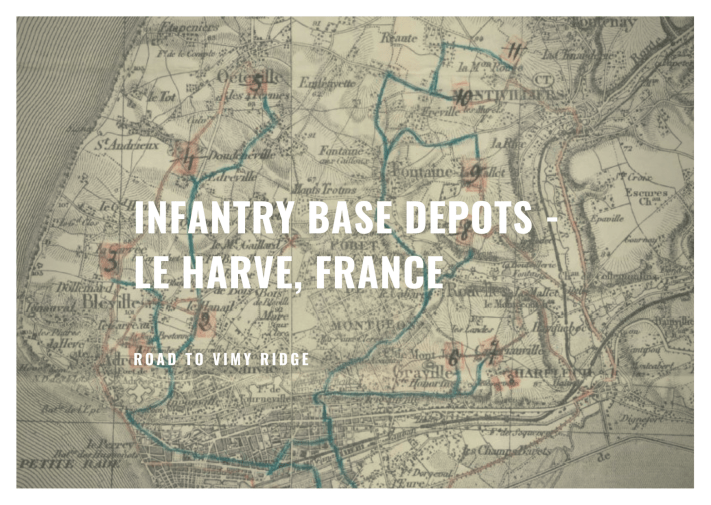
Percy left Southampton and crossed the English Channel in a small convoy on the night of August 28th. The crossing took just under 12 hours and they arrived in Le Havre, France the next morning before sunrise.
“Left Southampton somewhere about 8 or 9 PM for France arriving at Le Havre sometime during the night. Looks like quite an interesting place”
PES — August 28th, 1915
Le Havre is a coastal city in Normandy, located in the north-west corner of France. The city was founded by King Francis in 1517, constructed where the River Seine reaches the Atlantic Ocean. The city had been strategically built around it’s harbour, and rose to prominence during the late 18th century as a center of trading, particularly with colonies in the West Indies.
In 1915, the harbour was a very busy place, and it was being used as one of the most important port of entries connecting personnel and supplies between England and France. After disembarking from their ships, the soldiers were marched towards one of the many rest camps that had been set up for incoming troops. The name of their particular camp was Roullers, located just north of Harfleur Base.
“Disembarked at 7am or thereabouts and marched to base at Roullers. It began to rain before we had been there long. We had a devil of a march to base. I intend to reduce my pack.
We begin to miss the comforts of Shorncliffe.” — August 29th, 1915
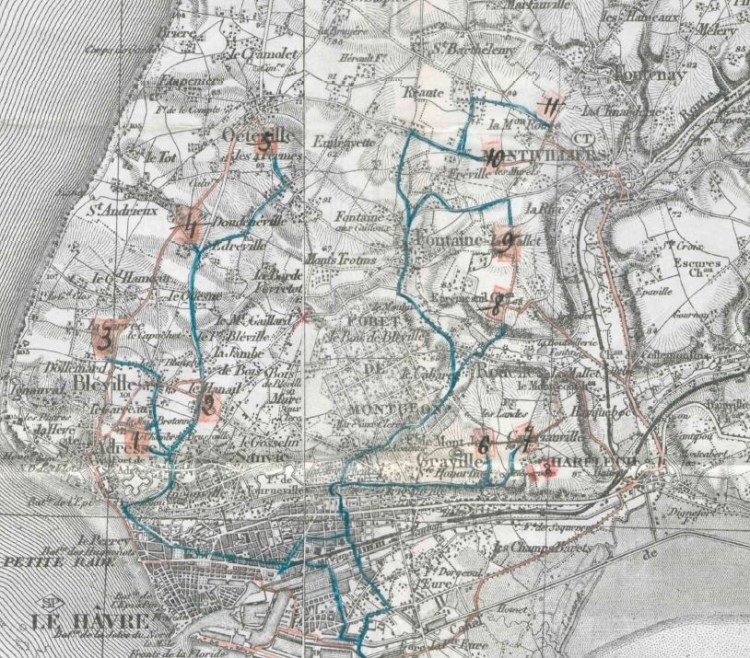
Infantry Base Depots (IBD)
Le Havre was one of the main Infantry Base Depots (IBD) for British troops traveling between England and France. Other major IBD’s were located in Calais, Bolougne, and Etaples. Le Havre was the location of the Canadian Expeditionary Force’s IBD until October of 1916, when it switched with the Australian and New Zealand to Etaples.
Infantry Base Depots were major hubs, responsible for organizing incoming soldiers and supplies and ammunition destined for the front lines. Goods would arrive in bulk by ship and be broken down into smaller loads to be shipped elsewhere by train. Thousands of horses were required for the war effort, and they would arrive in these port as well.
IBDs were used to organize the incoming troops in preparation for their deployment onto the front lines. Some of the men were fresh, arriving in France for the first time, while others were wounded veterans, on their way to return to their units. This was the first organizational step to prepare the troops for the front lines. Many of them would soon be drafted or deployed to the front lines to join their units. This was all organized from Hafleur Base, one of the busiest operation centers in France.
Men from around the world were arriving in huge numbers, including French colonial soldiers from West Africa, South Africans, New Zealanders, Australians and Canadians. Many rest camps and barracks were set up around the city as well as headquarters, hospitals, shops, and ammunition storage facilities.
“Reveille at 4:30 am. Inspected by Colonel in the morning. Fine all day. Messed around generally. Around the QM stores. Later on kit inspection. Went for stroll in evening. Limits very limited.” – August 30, 1915
Once the soldiers had settled into their barracks, they resumed a strict training regime designed to prepare them for deployment. Percy spent the next few days at Roullers camp being put through training exercises, parades and inspections. They were shown the basics of trench warfare from experienced troops.
The weather was terrible – “raining like hell” – which was a sign of things to come. They were expected to be ready and were paraded every day regardless of the weather. At night, the troops found a way to unwind. There were concerts and even a “Boxing competition in camp tonight.” Percy thought that it was “Quite good.” The food was terrible, described as “hard tack and jam”.
There were thousands of soldiers coming and going from the front lines. It must have been a logistical nightmare.
Deployment towards the front lines
On September 3rd a group of 19 soldiers were given orders and marched to a new camp north of Roullers. They were ordered to bring full packs. This came with little surprise, as they knew they weren’t destined to be in Le Havre for long.
The day after this, they were paraded in the afternoon, and marched towards Montvillers Train Station, just north of their location. From here they began the long journey towards the north of France. They were finally on their way towards the front lines. Percy would soon be joining the 1st Canadian Division in Belgium.
“Did nothing in the morning. After being paraded at 2:15 and inspected by colonel we marched to Montvilliers station and embarked on train consisting of a miscellaneous collection of about 35 cars.
Started there at 8pm and traveled all night. Did not get any sleep owing to crowded quarters.” – September 3, 1915
France had built up an extensive railroad network before the war, and this web of rail lines that criss-crossed across France helped the Allied forces keep to the frontlines supplied.
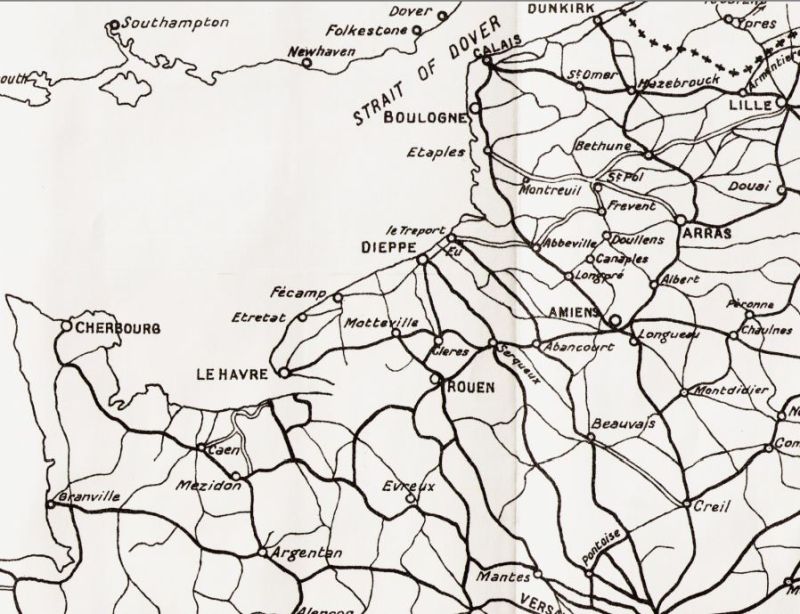
Their train was loaded with all sorts of people and supplies destined for the front lines. Their train traveled east through Normandy until Abbeville, at which point they headed north. The train followed the contours of the coast towards Boulogne and Calais.
The train rolled along the tracks through the countryside, passing through towns periodically along the way. This part of France would have appeared quite untouched by the horrors of war. Things would soon start to change.
“Traveled all day and passed through Abbeville, St. Omer, Hazelbrook, Calais and Boulonge. Arrived in Billets in time for supper.” – September 4th, 1915.
Late in the afternoon the train pulled into Ballieul. After a long day of travel they were happy to step off the train and stretch their legs. Their excitement was short lived. From the train station, they marched another 2 hours east across the French/Belgium border towards their new camp. Shortly after dinner they were given notice and immediately sent towards the front lines. Percy was about to receive his shocking introduction to the western front.
Sources:
- Primary Source: War Journal of Percy. [Canadian War Museum]
- Library and Archives of Canada [via www.canada.ca]
- Photos of Le Havre maps are thanks to “The Long, Long Trail” [via www.longlongtrail.co.uk]
 Road to Vimy Ridge
Pingback: Stand to – South of the Ypres Salient – Road to Vimy Ridge