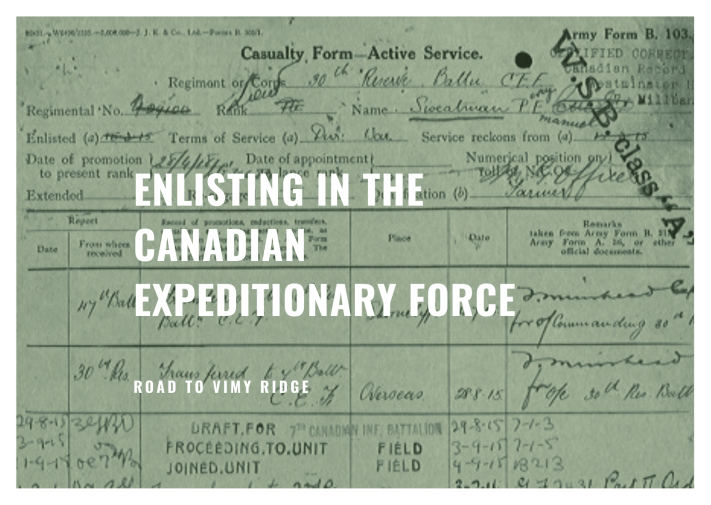
Today marks the beginning of a new journey, one in which we will follow the footsteps of a World War One soldier named Percy Sweatman. He served with Canadian during the First World War. During his time serving in the Canadian Expeditionary Force he kept a journal, in which he shared his experiences. He kept good track of his movements and made observations about the world around him. This is his story.
It is also my story. My name is Robert Sweatman. Percy is my Great Grandfather. He passed away long before I was born, peacefully of old age on Vancouver Island in 1973. Discovering his war journal peaked an interest in what was known as The Great War (or the “War to end all Wars”). I began casually researching what I could. At least the basics. I quickly realized with modern resources, it would become possible to discover a variety of things I did not know about the life of my Great Grandfather. With the help of his journal, I would be able to re-live his experience in France and Belgium during the First World War.
His journal has a permanent home in the Canadian War Museum in Ottawa. Before it was donated to the war museum, it was typed out and a copy was passed down to me. In the summer of 2019, I copied out this printed version into a Google document. In the upcoming days, months and years, I will try to follow his journey, from Vancouver to Europe.
The “Road to Vimy Ridge” will aim to bring the pages of Percy’s War journal to life.
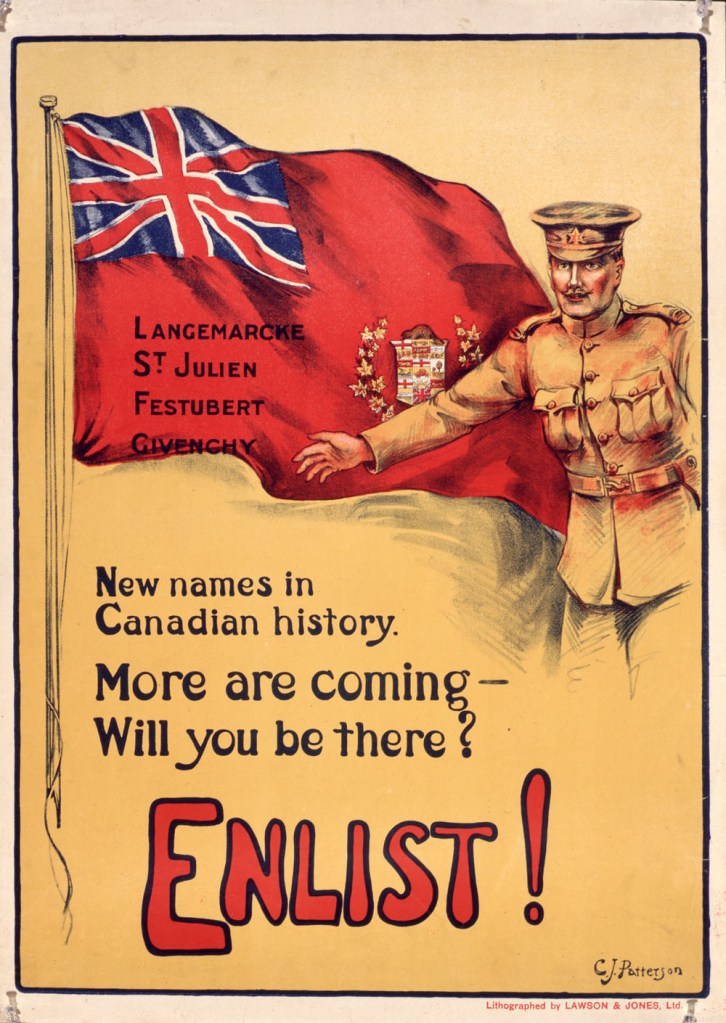
While Vimy Ridge is the most famous battle for the Canadians during the First World War, the Canadian contribution goes so much further than just one event. St Eloi, Ypres, Passchendaele and Hill 70 are just a few of the battles which defined Canada’s efforts during the First World War.
Throughout this process of discovery, I have seen how that one fateful weekend in April of 1917 is just a piece of the puzzle.
Joining the Canadian Expeditionary Force.
On March 12th, 1915 Percy enlisted in the Canadian Expeditionary Force (C.E.F.), signing his attestation papers in New Westminster, and formally joined the 47th Battalion.
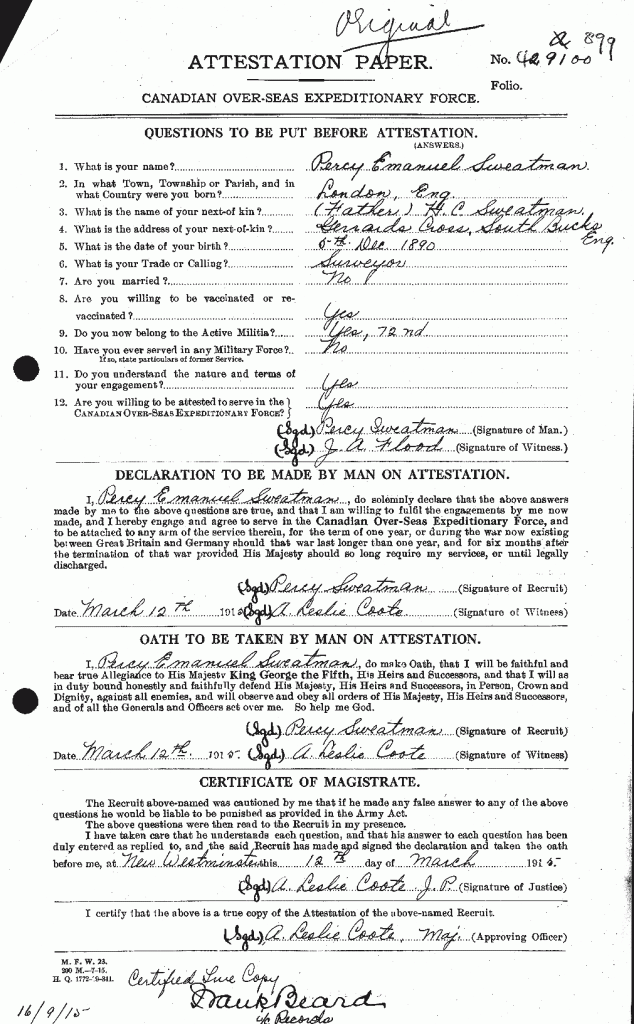
To join the C.E.F., soldiers were expected to pass a physical exam, qualifying them for service.
In June of 1915, he left Vancouver and traveled by train across the great expanse of the Dominion Canada. The journey would take him almost 4 days. Canada is very big.
The train arrived in Montreal, and he continued onwards to the port of Quebec City. Sometime in the middle of June, he boarded a ship that would take him to England.
It would take him two weeks to cross the Atlantic Ocean.
While the journal would help point my research in the right direction. I was able to get an idea of Percy’s first-hand experiences and a small window into his mind and how he was affected. The first journal entry marks his arrival in England. I begin to pin locations on maps and begin to have a rough idea of where his travels took him.
With the assistance of online resources, I’m able to begin putting together the pieces of Percy’s journal. There are many blanks to be filled in. Eventually, I stumbled upon the Library and Archives of Canada. This online resource includes the complete Personal Records from every soldier that served in the CEF during the First World War.
“Arrived at Shorncliffe from Vancouver.” – July 4th, 191
Library and Archives of Canada
Their collection has been digitalized and their search functions are very easy to navigate. I’m quickly able to locate Percy, and download a pdf file that contains his complete record of service; attestation papers, medical records, pay stubs and most importantly, Army Form B.
This is his personal file from the army and includes records of promotions, transfers, and casualties. I now have exact dates for many of the events that affected his movements. Two of Percy’s brothers also served in the First World War.
I’ve also now learned that his younger brother Eric had joined the army in June of 1915, and the two of them had traveled to France together on the same day (which explained why Percy enlisted in March but didn’t travel to England until June). His older brother Frank would later enlist, joining the C.E.F. in 1917.
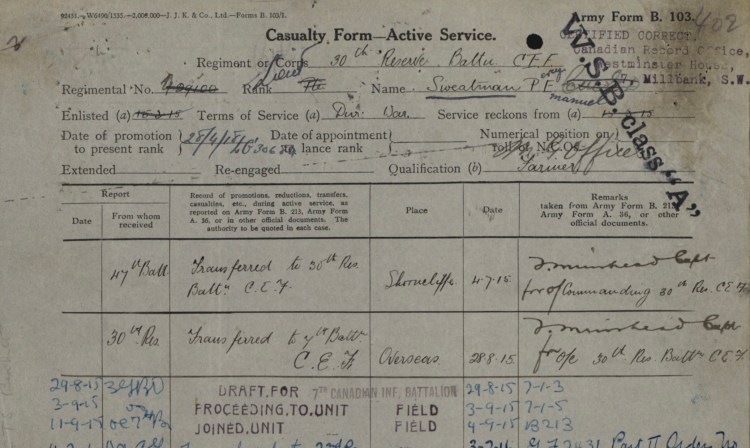
Armed with this new information – his regiment and Battalion – I was able to better trace his footsteps.
Eric and Percy’s records match each other quite well, and for the first few months, they follow the same path. Upon their arrival in England, they became a part of the 30th Battalion, a training unit based out of Shornecliffe. They spent the summer training in the Kent countryside. The Canadians became well known amongst the local population.
Percy was a private and served in the Infantry, which means they would be right on the front lines. He was assigned to a Machine Gun Division. He fired thousands of rounds from the Colt Machine Gun. They received training in trench warfare. The men were being prepared to be sent to the Western Front.
The massing of troops in England was destined to become the 2nd Canadian Division, who would soon be joining the 1st Division in France. It would double the number of troops currently occupying the front lines.
The next step in our journey will be to follow Percy’s deployment to France.
Drafted into the 7th Battalion
On August 28th, Percy and Eric were both drafted into the 7th Battalion of the 1st Canadian Division and given notice that they were being sent to France. Instead of continuing with the 2nd Division, who would be deployed a few weeks later, they would instead be reinforcing the troops already in France. It was time to go.
While Percy’s journal focuses mostly on first-hand impression of his immediate surroundings, being able to see the big picture would be important in figuring out exactly where they were and the major offenses they would take part in.
From 1914 onwards, the Western front stretched from the North Sea in Belgium to the mountains of Switzerland. Knowing exactly where they were being deployed would help to explain what he was describing.
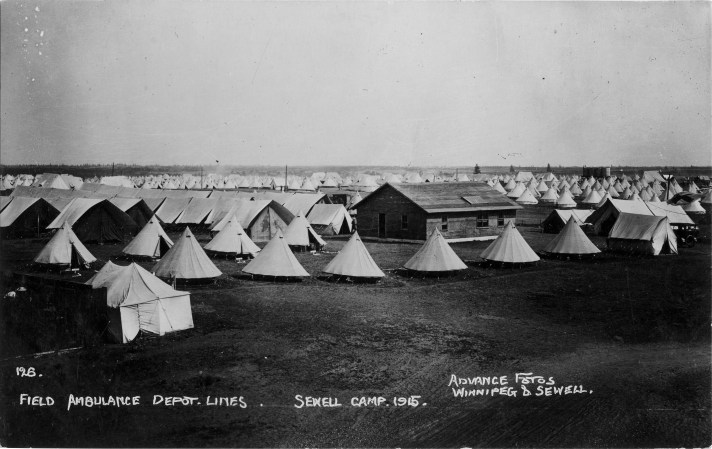
On August 28th, they left their temporary home in southern England and made their way towards Southampton by train. From there they crossed the English Chanel under the cover of darkness, arriving in the port in Le Havre France on the morning of August 29th.
Percy’s European adventure was about to begin.
“Left Shornecliffe for France at 8:00 after receiving about 10 minutes notice to get ready. Arrived at Southampton at 2:30pm.” – August 28th, 1915
Sources:
- War Journal of Percy [Canadian War Museum]
- Library and Archives of Canada [via www.canada.ca]
- Image of Shorncliffe via Warren Press [via www.warrenpress.net]
- Image of Shorncliffe via Toronto Postcard Club [via www.torontopostcardclub.com]
 Road to Vimy Ridge